
Shade
A two-tier canopy of silver oak and native trees filters the sun, cools the soil and slows ripening, so sugars have time to develop.
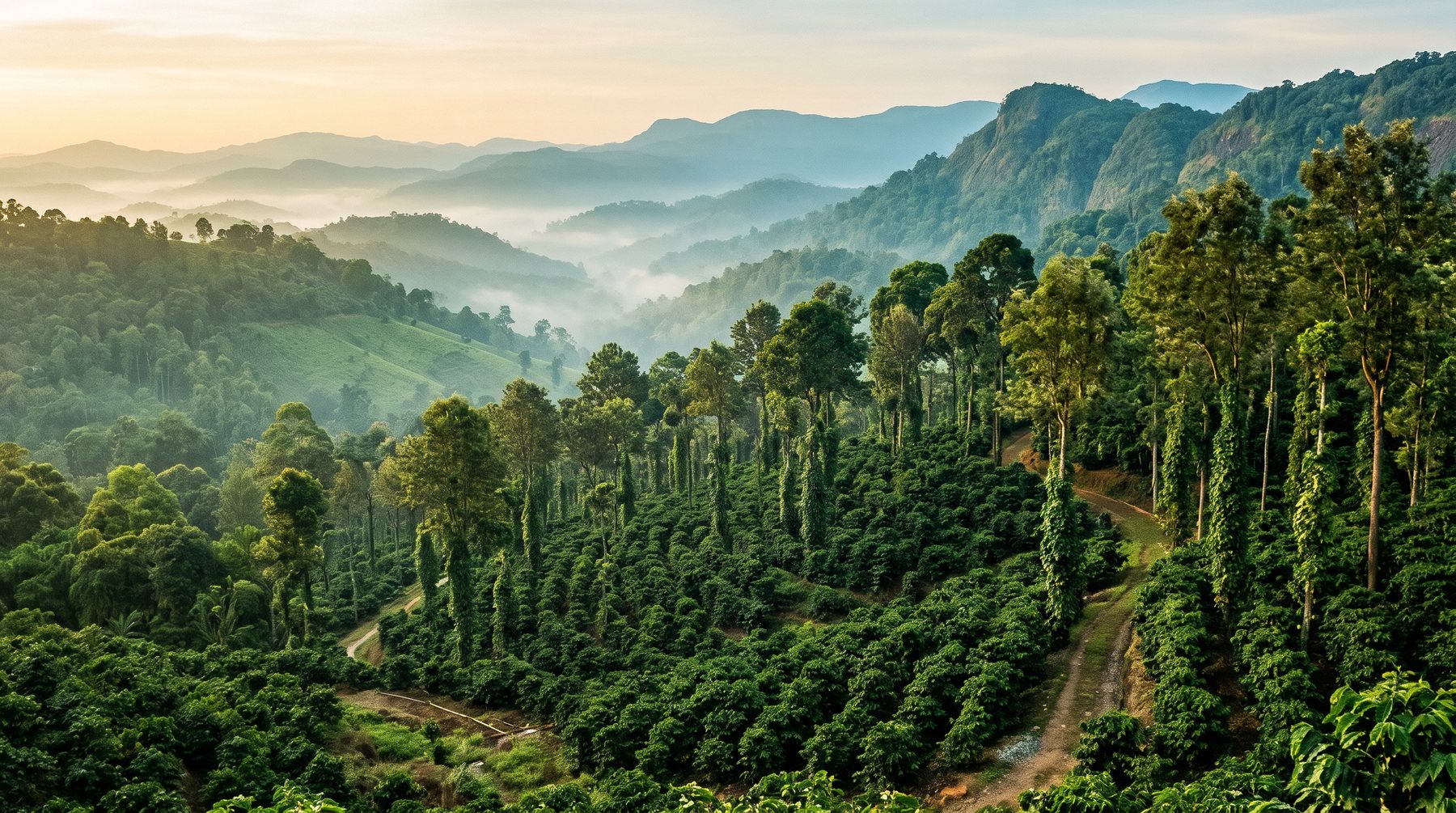
Every Noble coffee is grown in India, on shaded hillsides in the Western Ghats. Meet the estates, the varietals and the processes behind each box.
Chikkamagaluru is where coffee first took root in India. Local legend holds that in the seventeenth century the Sufi saint Baba Budan carried seven coffee seeds home from Yemen and planted them in the hills that now bear his name. These slopes of the Western Ghats, a UNESCO World Heritage mountain range and one of the most biodiverse places on earth, still grow some of the country’s finest Arabica.
Unlike open sun plantations common elsewhere, Indian coffee grows beneath a living canopy. Tall silver oak and native forest trees shade the coffee bushes; black pepper vines climb their trunks, and cardamom grows in the cool understorey. The shade slows ripening, giving each cherry more time to build sugar, and the canopy shelters birds, soil and water.
Then comes the monsoon. The south-west monsoon soaks the Ghats from June to September, and the earlier “blossom showers” of March and April bring out the white, jasmine-scented flowers that become the year’s crop. Harvest runs from roughly November into March: Arabica first on the higher slopes, Robusta later in the warmer valleys below.
A two-tier canopy of silver oak and native trees filters the sun, cools the soil and slows ripening, so sugars have time to develop.
Blossom showers in spring set the flowers; the south-west monsoon then waters the crop through the summer months as the cherries swell.
Cooler nights higher up slow the cherry further and concentrate acidity and aromatics. Our brightest filter lots grow at the top of the range.
Each profile is built from our product passports: where the coffee grows, which varietals, and how the cherries are processed.
Chikkamagaluru · Karnataka
Gungegiri farms the shaded upper slopes of Chikkamagaluru, where tall silver oaks carry black pepper vines and cardamom grows in the cool understorey. Cherries here ripen slowly in misty air, building the sugar that patient processing depends on.
Two of our most expressive coffees come from this estate: a Chandragiri lot taken through a dark honey process, and a Catimor lot that is sealed, inoculated with a selected yeast and dried as a natural. Same hillside, two very different cups.
Chikkamagaluru · Karnataka
The highest-grown coffee we roast. Yelnoorkhan sits in the Chikkamagaluru hills under a layered canopy of silver oak and native shade, and the cooler nights at this elevation slow the cherry down even further.
Its Chandragiri cherries are fermented for 72 hours in sealed tanks without oxygen, then washed clean and dried slowly in the shade on raised beds. The result is Signet: tea-like, citrus-bright and quietly tropical.
Chikkamagaluru & surrounding Karnataka coffee country
Our four signature blends draw on washed and natural lots from partner estates across Chikkamagaluru. Arabica comes from the higher slopes; for Regent and Imperial, fine Robusta is grown lower down in the warmer, wetter valleys where it thrives.
Blending lets us build a cup for a purpose: a sweet, chocolatey espresso in Grace, an all-rounder in Opus, and the weight and crema that milk coffee and South Indian filter lovers look for in Regent and Imperial.
 Grace₹649
Washed & Natural (blend)
Dark Chocolate · Roasted Nuts · Red Berry
View Grace
 Opus₹599
Washed & Natural Blend
Dark Chocolate · Roasted Nuts · Fruity
View Opus
 Regent 4:1₹549
Washed Arabica + Natural (Cherry) Robusta
Dark Chocolate · Roasted Nuts · Fruity
View Regent 4:1
 Imperial 1:1₹499
Washed Arabica + Natural (dry-processed) Robusta
Dark Chocolate · Roasted Nuts · Fruity
View Imperial 1:1
Hover, tap or tab through the bars to compare coffees.
≈ 1,200–1,350 m≈ 3,950–4,450 ft
Yellow Tropical Fruit · Lemon Zest · Sweet Finish
Explore Sigil Gungegiri Estate≈ 1,200–1,400 m≈ 3,900–4,600 ft
Yellow Tropical Fruit · Sweet Lime · Red Berries
Explore Talisman Yelnoorkhan Estate≈ 1,300–1,450 m≈ 4,250–4,750 ft
Tropical Fruit · Earl Grey Tea · Citrus
Explore Signet Signature blend · partner estates≈ 1,100–1,400 m≈ 3,600–4,600 ft
Dark Chocolate · Roasted Nuts · Red Berry
Explore Grace Signature blend · partner estates≈ 1,100–1,400 m≈ 3,600–4,600 ft
Dark Chocolate · Roasted Nuts · Fruity
Explore Opus Signature blend · partner estates≈ 850–1,350 m≈ 2,800–4,400 ft
Dark Chocolate · Roasted Nuts · Fruity
Explore Regent 4:1 Signature blend · partner estates≈ 750–1,350 m≈ 2,450–4,450 ft
Dark Chocolate · Roasted Nuts · Fruity
Explore Imperial 1:1Ranges are typical growing altitudes for each lot or blend component (≈), above sea level. Blends span a wider range because their Arabica and Robusta components grow at different heights.
Most of our Arabica comes from selections developed in India for the shade, rainfall and leaf-rust pressure of the Western Ghats.
Villa Sarchi × Timor Hybrid
Selected and released by the Central Coffee Research Institute at Balehonnur, Karnataka. A compact, hardy plant bred for tolerance to leaf rust, with notably bold beans.
In the cupClean and sweet, with enough structure to carry fruit-forward processing.
Caturra × Timor Hybrid
First crossed in Portugal in 1959 to combine Caturra’s compact, productive habit with the rust resistance of the Timor Hybrid. India’s best-known Catimor selection is Cauvery.
In the cupPicked ripe and processed with care, it can carry bright, surprisingly fruity flavours.
Kent’s × S.288
Released in the 1940s from the Balehonnur research station and for decades one of the most widely planted Arabicas in South India. S.288 carries a trace of Liberica heritage, which helps with leaf-rust tolerance.
In the cupBalanced and familiar: gentle acidity with the chocolate and spice of classic South Indian coffee.
Coffea congensis × Coffea canephora
An Indian Robusta selection that crosses Robusta with its close relative Coffea congensis, giving a compact plant suited to the warmer, lower slopes. Robusta naturally carries more caffeine than Arabica.
In the cupWeight, crema and a cocoa bite that holds its own in milk and in filter kaapi.
Processing is how the fruit is removed and the bean is dried. It shapes flavour as much as the plant itself.
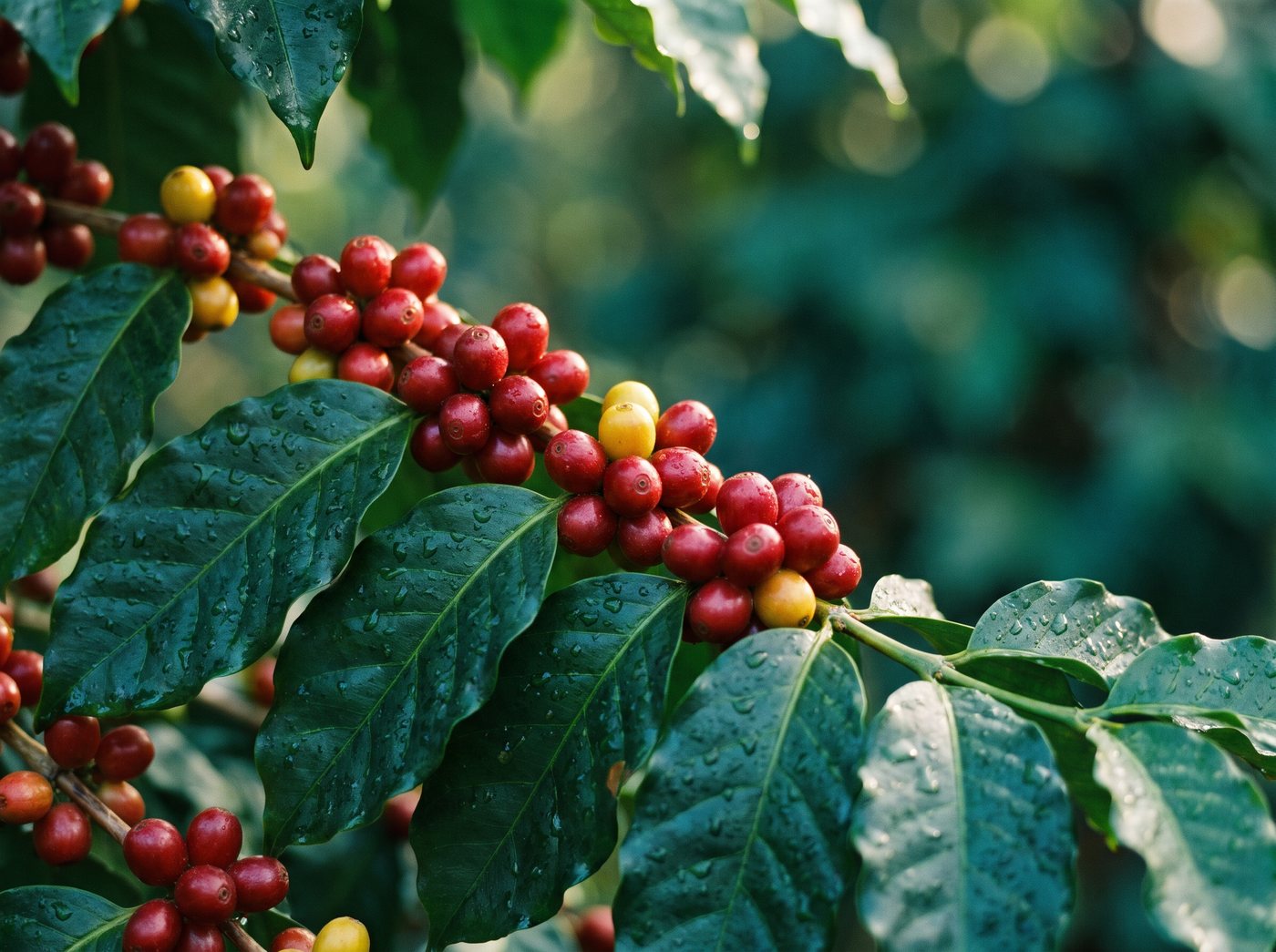
The skin and fruit are removed before drying, so what you taste is the bean and its terroir with very little fruit in between.
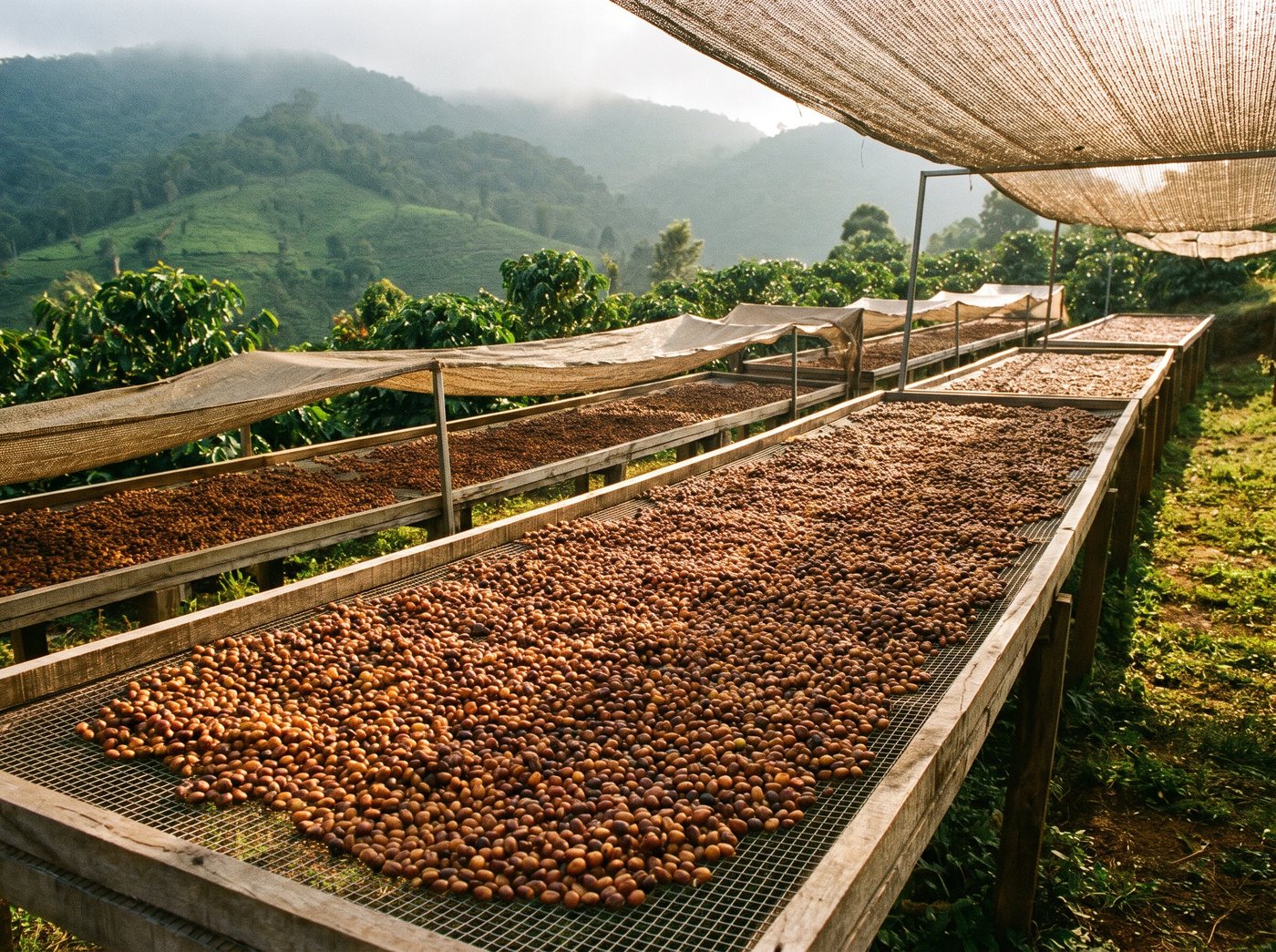
A middle path between washed and natural: the skin comes off, but some or all of the sticky, sugary mucilage is left on the bean while it dries.
The oldest way to process coffee: the whole cherry is dried intact, with the bean inside, before the dried fruit is hulled off.
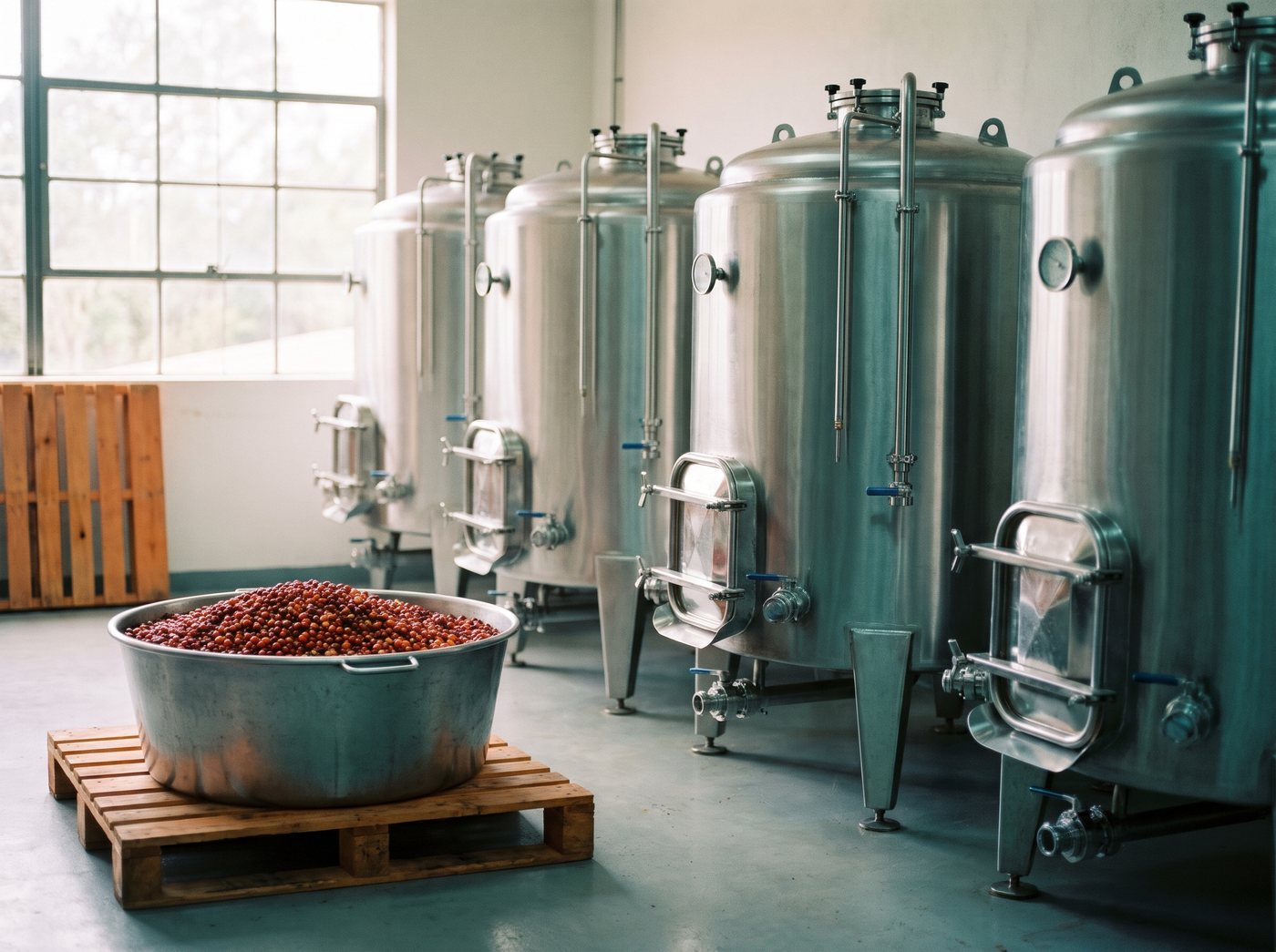
Coffee is fermented in sealed tanks with the oxygen shut out. As carbon dioxide builds up, fermentation changes character and new aromatics develop.
Rather than leaving fermentation to the wild microbes on the fruit, the producer adds a selected yeast culture to steer it towards a particular flavour.
Estate names, varietals and processes come straight from the labels on our boxes. Detailed lot data marked ≈, such as altitude, harvest window, fermentation and drying times, Agtron and cupping scores, are typical values for that lot and region, shared in good faith while we finalise lot-level records with our partner estates. We will update them as each harvest’s data comes in.
The Estate Taster Flight puts three 75 g pouches on your counter for ₹699, the easiest way to taste altitude and process for yourself.


