


3 × 250 g · Save 15%
Rs. 2,630 Rs. 2,236Build this 3-Pack
The Black & Pour-Over Flight
Three clean, sweet, tea-like coffees that shine black in a V60, AeroPress or French press.
72-Hour Anaerobic Washed, Shade Dried · Chandragiri · Yelnoorkhan Estate
Tastes like a plate of chilled pineapple and ripe Totapuri mango slices
Drink it black and a little cooled, like an afternoon cup of tea; milk would bury the fruit and florals that make this lot special.
Click image to zoom · Arrow keys to browse · Esc to close
Sip Signet and you get ripe mango and pineapple with a squeeze of lime, finished with the soft, perfumed note of Earl Grey tea. At Yelnoorkhan Estate the freshly picked coffee rests for three days in sealed tanks with no air, where natural yeasts slowly turn the fruit sugars into tropical and floral flavours, and slow drying in the shade keeps those flavours clean instead of heavy. It feels light and silky in the mouth, much like a good cup of black tea, and the sweet, citrusy finish stays with you long after each sip.
Select a segment to explore it. Primary family: Tropical Fruit.
Aromatic finish
Long, tea-like finish of bergamot and faint jasmine
Tap any family on the wheel to see its notes, what it tastes like and how it might remind you of something from home.
At around 90°C the aroma is all jasmine and citrus peel, with the fruit still tucked in behind a bright, tangy edge.
Around 60°C the mango and pineapple open up fully and the cup turns juicy and sweet, balanced by a soft lime brightness.
At about 40°C it drinks like a cooled cup of Earl Grey with a squeeze of orange, with the sweetness and bergamot finish at their clearest.
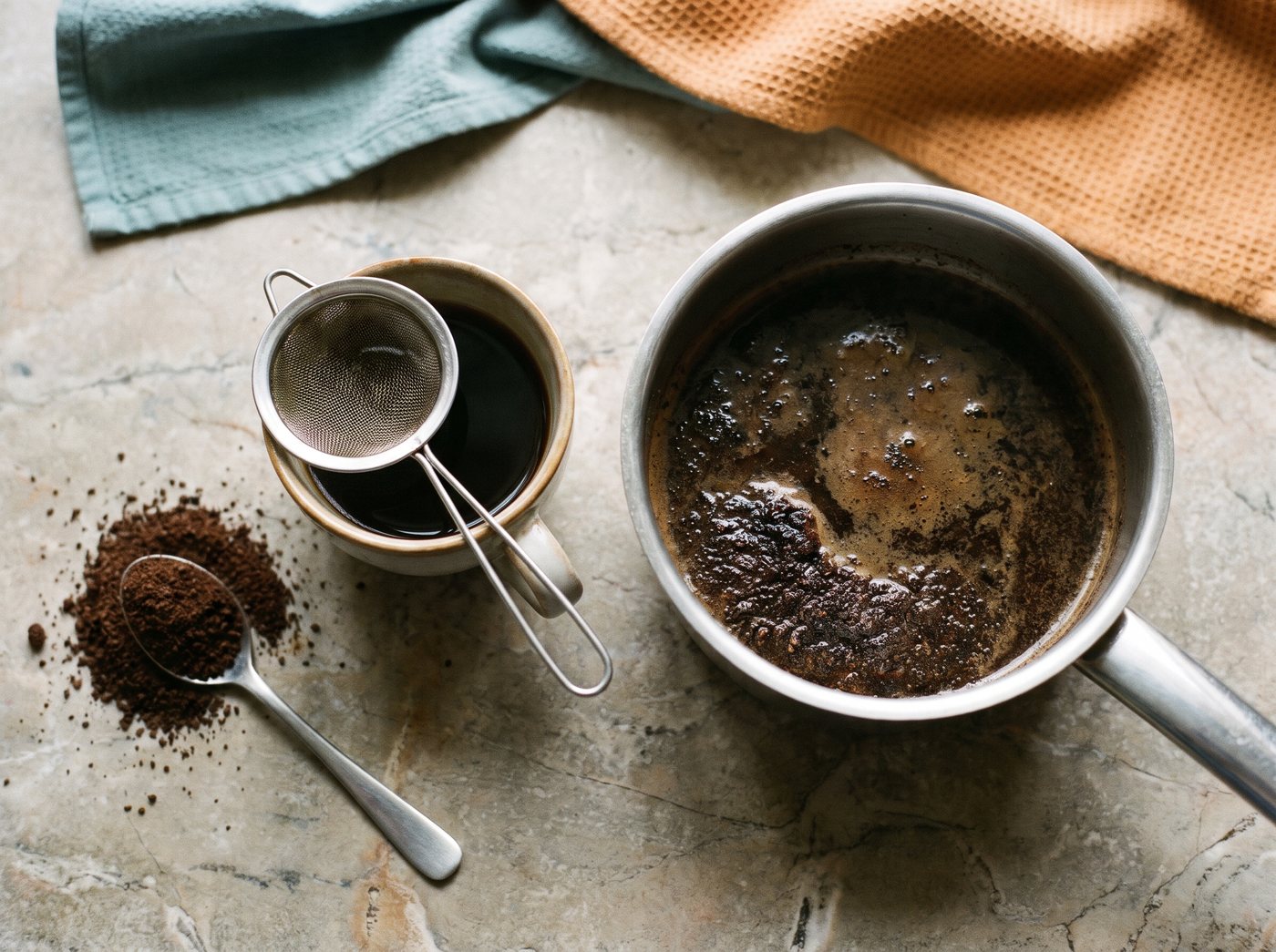
Add 12 g of coffee to a jug or vessel and pour over 200 ml of water at about 95°C (just off the boil).
Stir gently, cover and let it steep for 4 minutes.
Strain through your channi into a cup and drink it black.
Steep 15 g of coffee in 120 ml of hot water, covered, for 4 minutes.
Fill a glass with 100 g of ice.
Strain the strong brew through your channi straight onto the ice and stir.

Add 20 g of coffee to the top chamber, press lightly with the plunger disc and pour in 100 ml of hot water.
Close the lid and let the decoction drip through for about 12 minutes.
Top the decoction with 150 ml of hot water for a clean black cup; if you prefer milk, 150 ml of hot milk works, though the fruit shows best black.
Brew a strong decoction with 20 g of coffee and 90 ml of hot water.
Fill a tall glass with 120 g of ice.
Pour the decoction over the ice, stir well and top up with about 30 ml of cold water to taste.

Fill the bottom chamber with 150 ml of hot water up to the valve and level 16 g of coffee in the basket without pressing.
Heat on low-medium with the lid open and take it off as soon as the coffee turns pale and starts to sputter.
Pour into a cup and add a little hot water if you want it softer and more tea-like.
Brew 16 g of coffee with 150 ml of hot water on low-medium heat.
Fill a glass with 120 g of ice.
Pour the hot moka coffee over the ice and stir until chilled.

Rinse the paper filter, add 15 g of coffee and pour 40 ml of 95°C water to bloom for 35 seconds.
Pour slowly in circles up to 250 ml total by about 1:45.
Let it drain fully by around 2:45, swirl and serve black.
Put 100 g of ice in the server under your dripper.
Bloom 15 g of coffee with 30 ml of 95°C water, then pour up to 150 ml total.
Let it drain onto the ice by about 2:30, swirl and pour into a chilled glass.
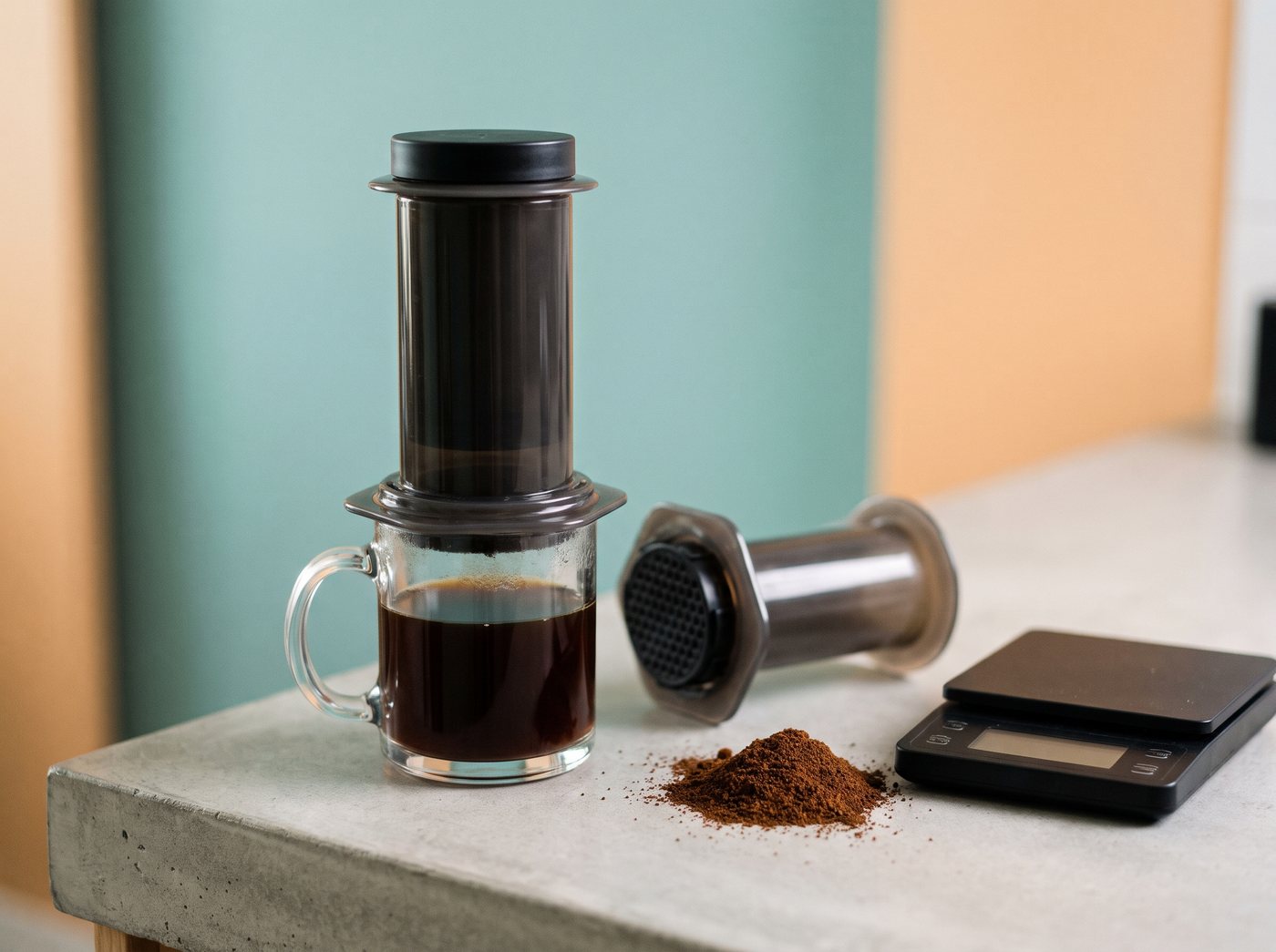
Add 15 g of coffee to the AeroPress and pour in 220 ml of 93°C water.
Stir three times, fit the plunger and wait until 1:30.
Press gently for about 30 seconds and drink it black.
Place a mug with 90 g of ice under the AeroPress.
Add 15 g of coffee and 130 ml of 93°C water, stir and steep until 1:15.
Press slowly onto the ice and stir until cold.

Add 18 g of coffee and pour in 300 ml of 95°C water.
Stir once, put the lid on and steep for 4 minutes.
Skim off the foam, press slowly and pour everything out so it does not over-brew.
Steep 20 g of coffee in 180 ml of 95°C water for 4 minutes.
Fill a tall glass with 120 g of ice.
Press and pour the strong brew over the ice, then stir.

Dose 18 g of finely ground coffee into the basket, level and tamp evenly.
Pull about 40 g (roughly 40 ml) of espresso in about 30 seconds; the 40 ml here is the drink you get, not water used.
Taste it as a juicy, bright shot, or add 100 ml of hot water for a long black.
Fill a glass with 100 g of ice and 100 ml of cold water.
Pull an 18 g in, 40 g out shot in about 28 seconds; the 40 ml is the espresso yield.
Pour the shot over the ice for a fruity iced americano and stir.
Chandragiri · 72-Hour Anaerobic Fermentation, Washed, Shade Dried · 1,300–1,450 MASL
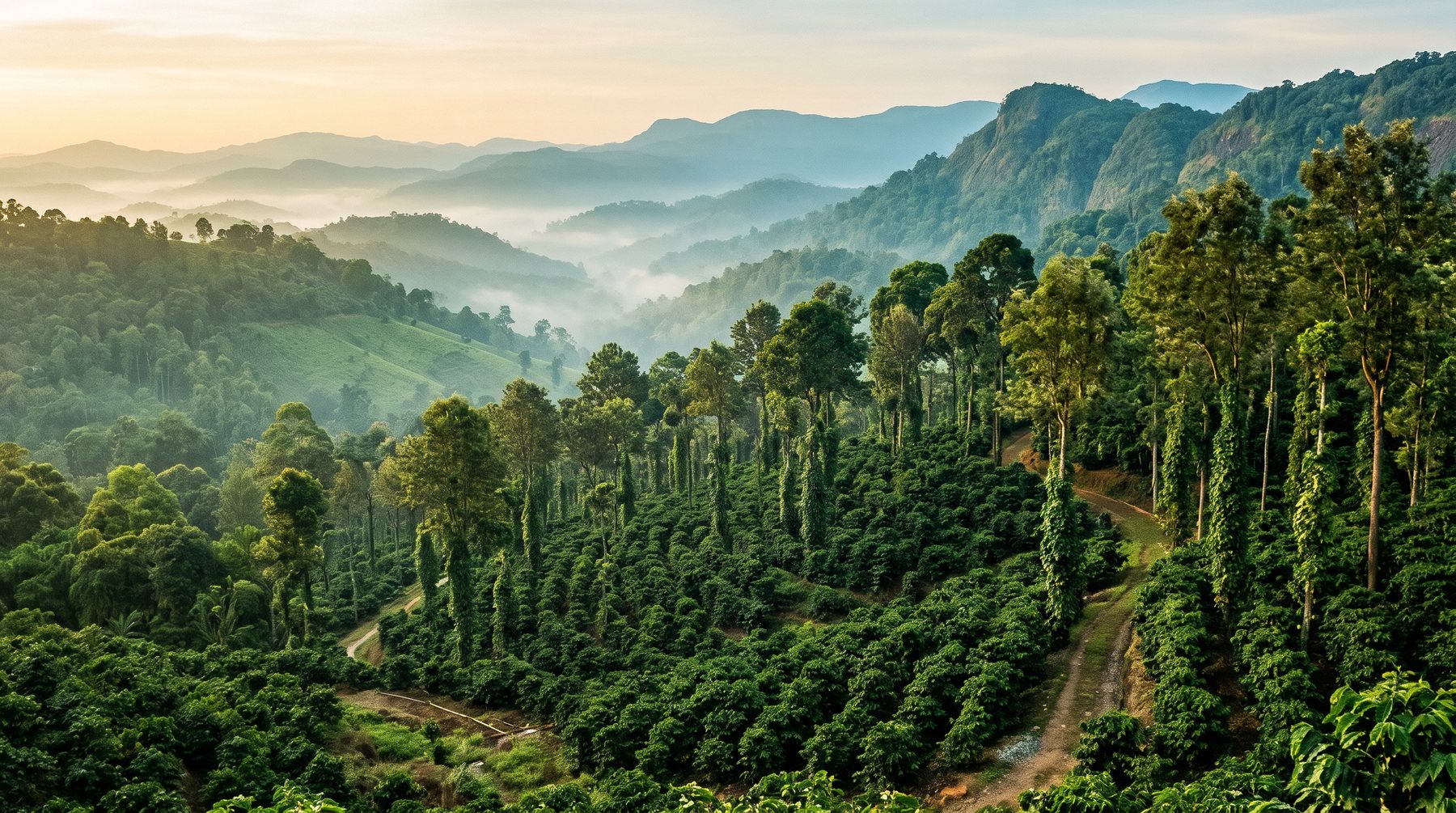
Yelnoorkhan Estate sits in the hills of Chikkamagaluru, in the Western Ghats of Karnataka, where coffee first took root in India. The coffee grows in the shade of tall silver oak trees, with black pepper vines and cardamom planted alongside, and the cool mountain air lets the cherries ripen slowly and build sweetness.
This lot is Chandragiri, a variety released by the Central Coffee Research Institute at Balehonnur. It was selected from a cross of Villa Sarchi and Timor Hybrid, giving Indian growers a compact, hardy Arabica with bold beans and a clean, sweet cup.
For Signet, the estate took Chandragiri somewhere new: the freshly picked coffee spent 72 hours in sealed, oxygen-free tanks, was washed clean, and then dried slowly in the shade. That patient fermentation is what turns a familiar Indian variety into a cup full of tropical fruit, flowers and Earl Grey tea.
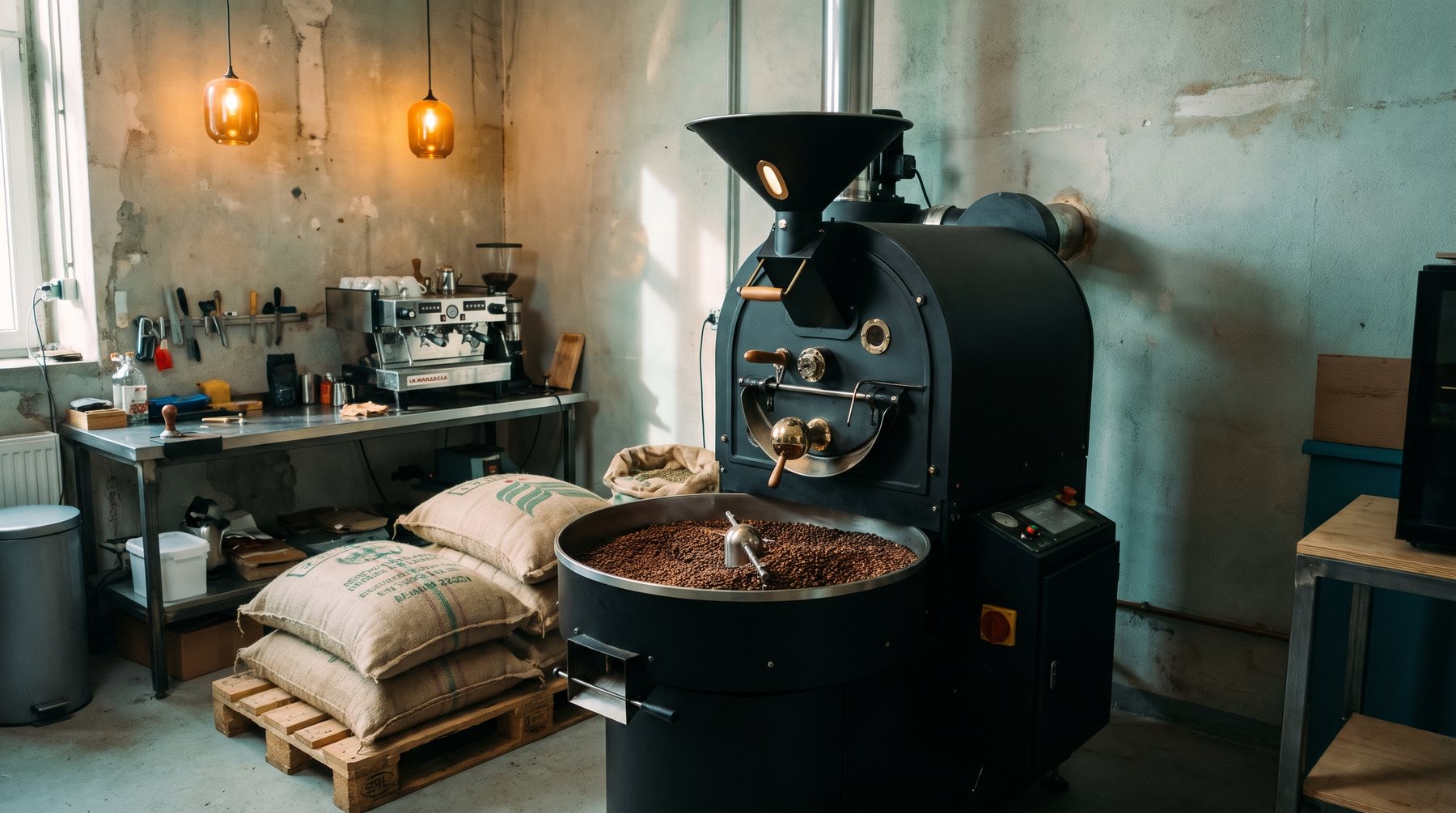
We roast Signet light on our digitally profiled electric-hybrid roaster in Hyderabad, only after you order. A gentle, carefully tracked profile keeps the fruit and florals intact, so the bag that reaches you still tastes of mango, lime and Earl Grey.
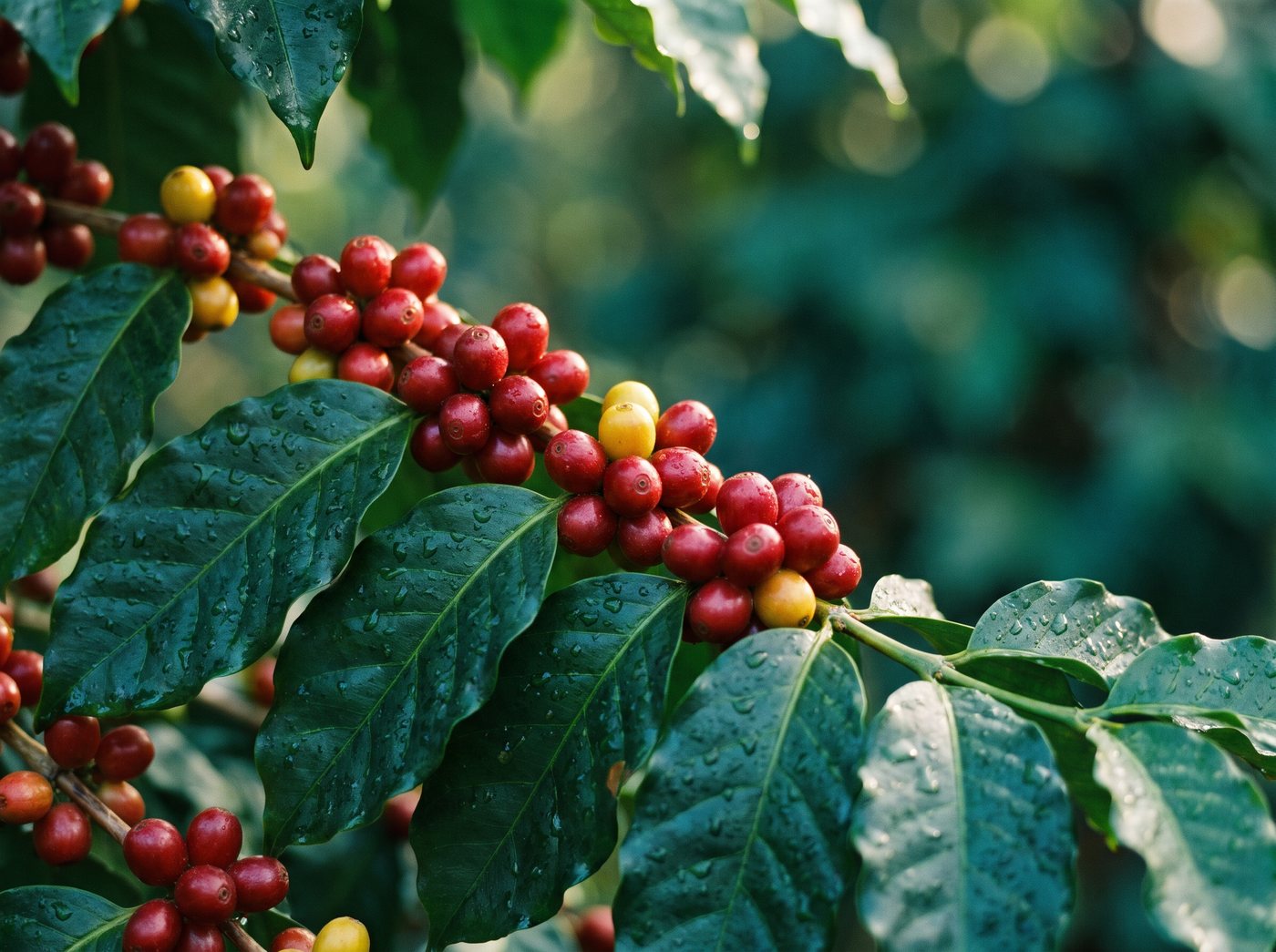
Only fully ripe, deep-red Chandragiri cherries are hand-picked and floated to remove light or damaged fruit. High natural sugar is important, because it feeds the long fermentation that follows.
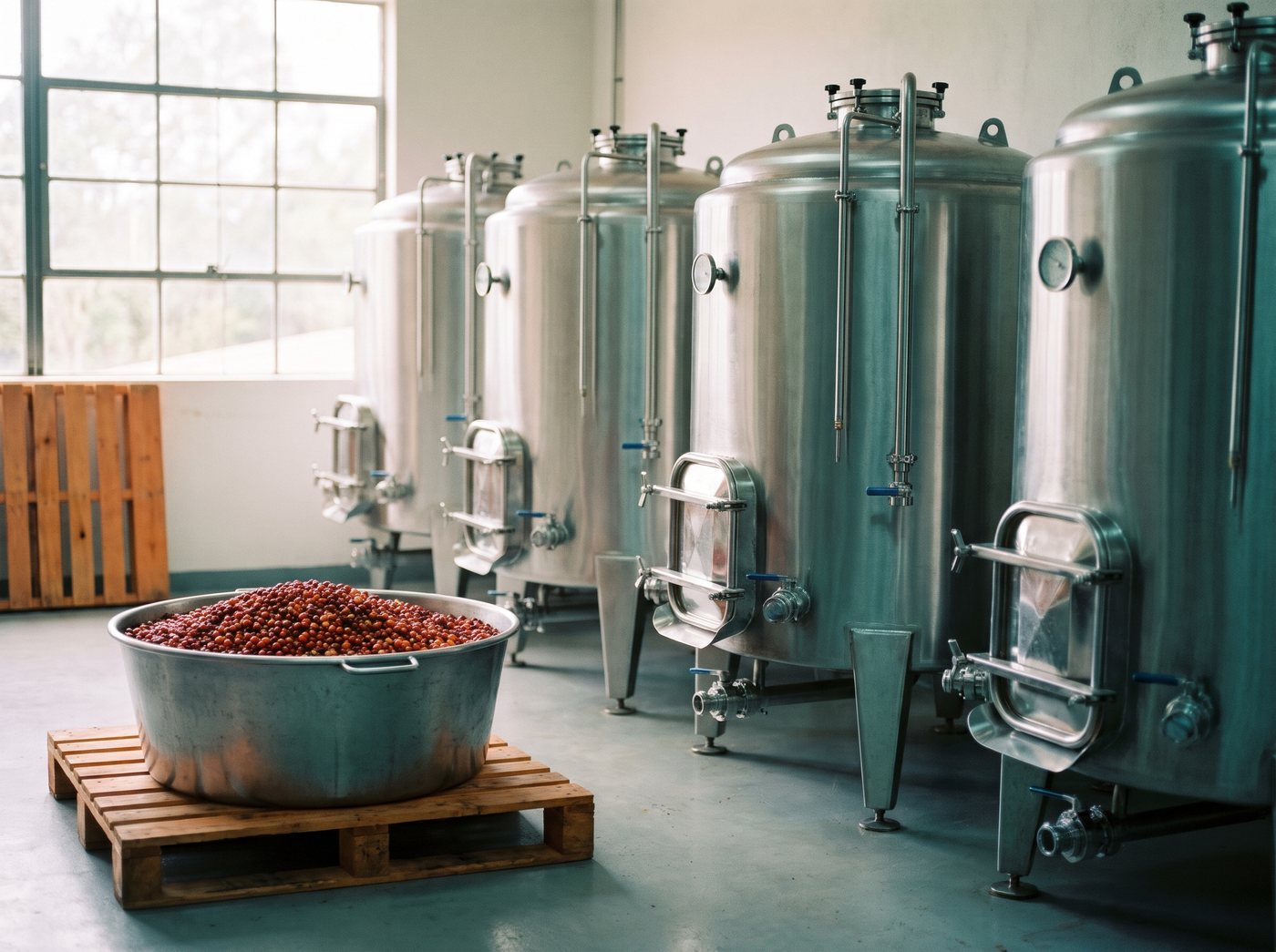
The coffee is sealed in airtight tanks with no oxygen for 72 hours, so slow, controlled fermentation builds tropical fruit and floral flavours. It is then washed clean with fresh water to keep the cup crisp and bright.
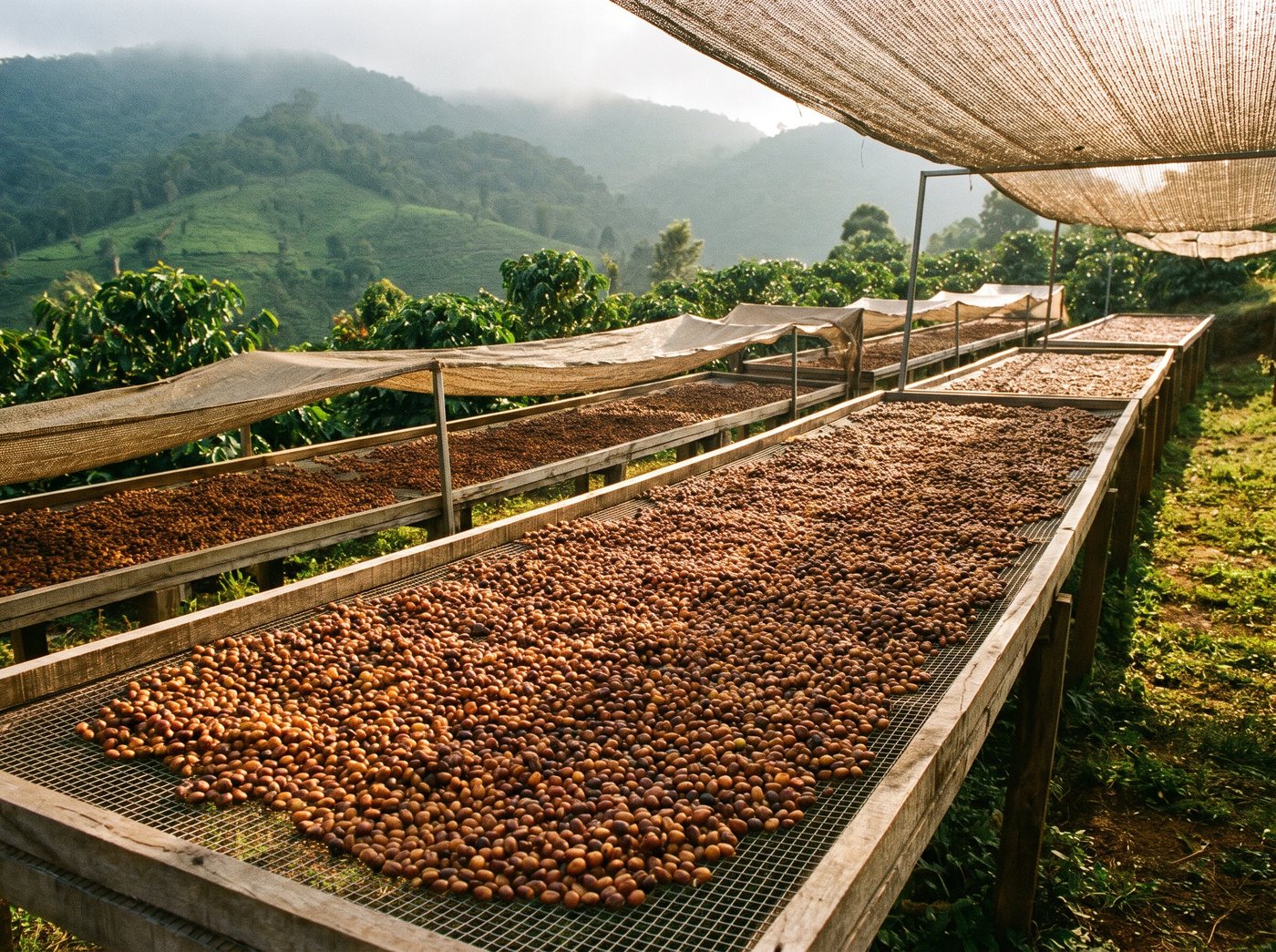
The washed beans dry slowly on raised beds under shade instead of in direct sun. This gentle, even drying protects the delicate aromatics and gives a cleaner, longer-lasting finish.
Lot data marked ≈ are typical values for this estate and process, pending roaster verification for the current lot.
Coffee needs a short rest after roasting before it tastes its best. For Signet, the sweet spot opens 10 days after the roast date and holds at its peak until about day 14.
Roast date is printed on every packPeak: day 10–14
Freshly roasted beans keep releasing carbon dioxide for days, and light roasts like this one hold on to it longer. Give the bag 10 to 14 days after the roast date so the gas settles and the fruit and floral notes come through clearly instead of tasting sharp or muted.
We roast to order, so your box usually arrives a few days into its rest. Check the roast date on the pack, count forward and brew your first cup on day 10. If you can’t wait, it’s perfectly good earlier — just a little sharper.
Roasted to order and dispatched within 48 hours (Mon–Sat). Delivery takes 2–5 business days across India. Shipping is free on orders over ₹999; below that it’s a flat ₹79.
Coffee is a food product, so we can’t take back opened packs. If your order arrives damaged or isn’t what you ordered, email us a photo and we’ll put it right. Read the full shipping & freshness policy.
Three clean, sweet, tea-like coffees that shine black in a V60, AeroPress or French press.
Anaerobic, yeast-fermented and honey-sweet lots — juicy, floral and surprising.


Anaerobic & Yeast-Fermented Natural · Catimor · Gungegiri Estate


Dark Honey Sun-Dried · Chandragiri · Gungegiri Estate


Medium+ Espresso Roast · Washed & Natural Chikkamagaluru Arabica Blend

